

By Mlungisi Shabalala, 27 February 2026
In October 2025, the onset of the rainfall season in KwaZulu-Natal (i.e. uMngeni-uThukela Water’s operational area), the International Research Institute for Climate and Society (IRI) predicted the likelihood for the development of a La Niña cycle during the 2025/26 summer season. La Niña cycles are associated with cool and wet weather conditions in southern Africa. Therefore, above-average rainfall was expected for most of the country, particularly the KwaZulu-Natal Province. This article presents the rainfall received across the different regions of UUW’s operational area between October 2025 and January 2026 to assess the impact of the La Niña cycle in KwaZulu-Natal.
The uMngeni System, represented by the Midmar, Nagle, Albert Falls and Inanda Dams, received below-average rainfall between October and January, except during November 2025, where all parts of the uMngeni System received relatively normal to above-average rainfall. The lowest rainfall was observed in January 2026, with the uMngeni System receiving 30% of normal rainfall.
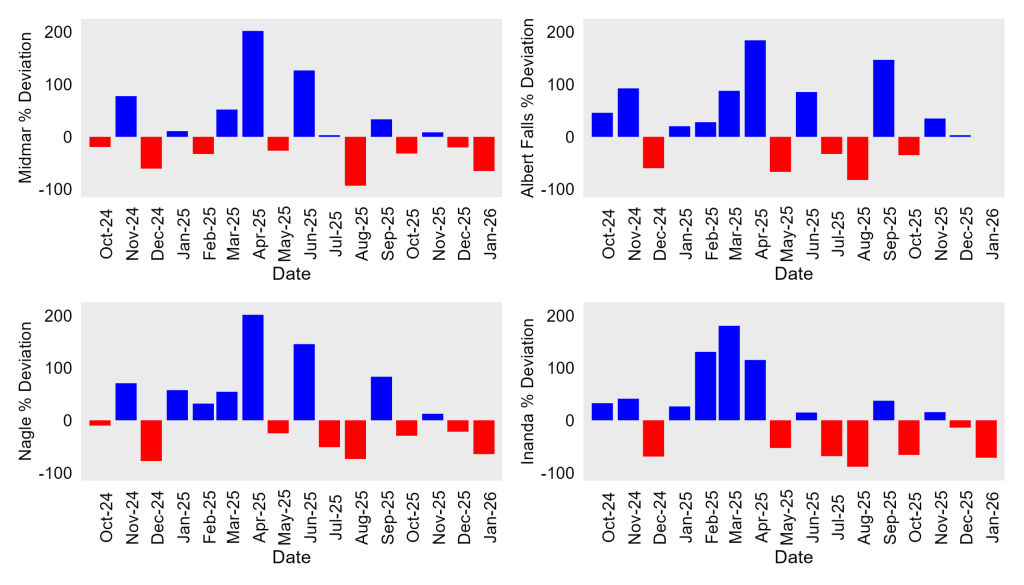
Figure 1: Monthly rainfall for dams in the uMngeni System (shown as percentage deviation from the long-term average).
Similar to the uMngeni System, the South Coast System, represented by Mhlabatshane, Amanzanyama, Umzinto and Nungwane Dams, received below-average rainfall at the onset of the rainfall season. Only the Mhlabatshane and Umzinto Dams received above-average rainfall in November and December 2025, respectively. During January, which is normally the wettest month of the year, the South Coast received about 30% of the long-term average rainfall.
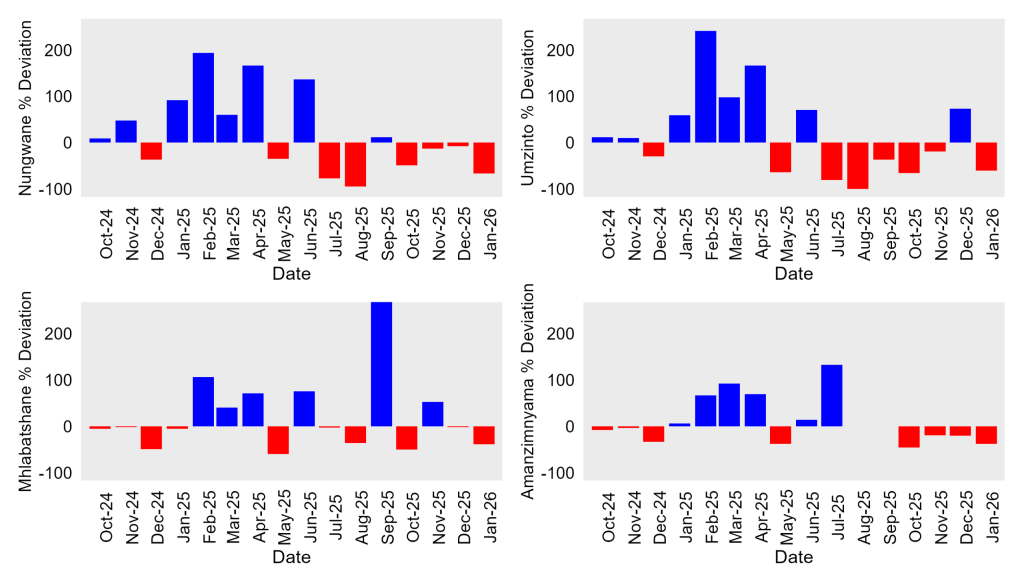
Figure 2: Monthly rainfall for dams in the South Coast System (shown as percentage deviation from the long-term average).
Similar to the uMngeni and South Coast regions, the North Coast, represented by the iMvutshane and Hazelmere Dams, received below-average rainfall during the first half of rainfall season, with the January 2026 rainfall being 70% below the long-term average.
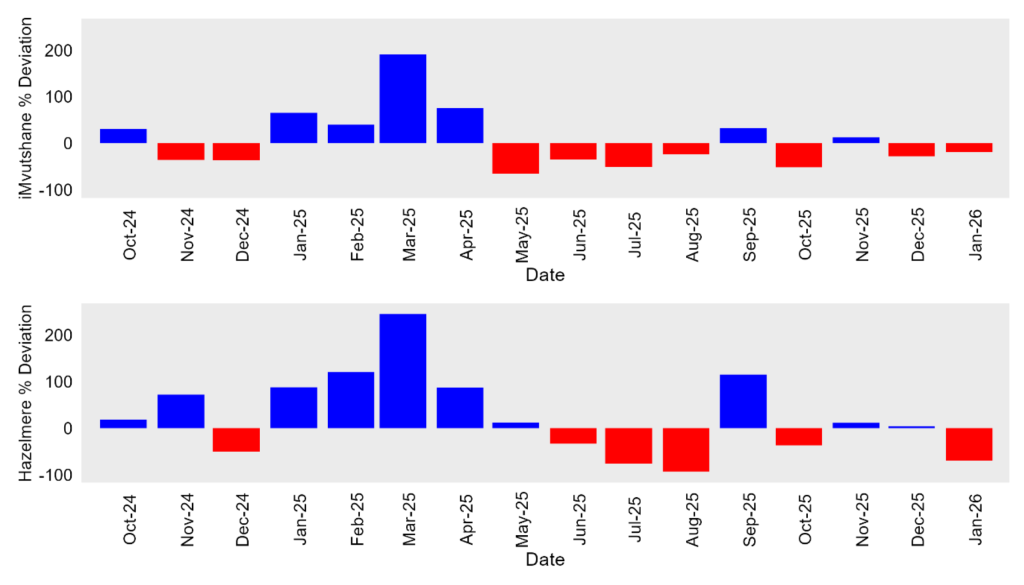
Figure 3: Monthly rainfall for dams in the North Coast System (shown as percentage deviation from the long-term average).
The uMhlathuze System (represented by Eshowe, Melmoth, Mhlathuze Weir and the Goedertrouw Dam) experienced a mixture of above-average and below-average rainfall during the first four months of the rainfall season. Below-average rainfall was received at the onset of the rainfall season, i.e. October 2025. However, this was followed by two good rainfall months, i.e. November and December, with the rainfall received in Eshowe being nearly 200% above the long-term average in December. During January 2026, however, the Mhlathuze System received below-average rainfall – which is consistent with the afore-mentioned regions. The Goedertrouw Dam, i.e. the region’s main water resource, received only 33% of the long-term average rainfall during January 2026.
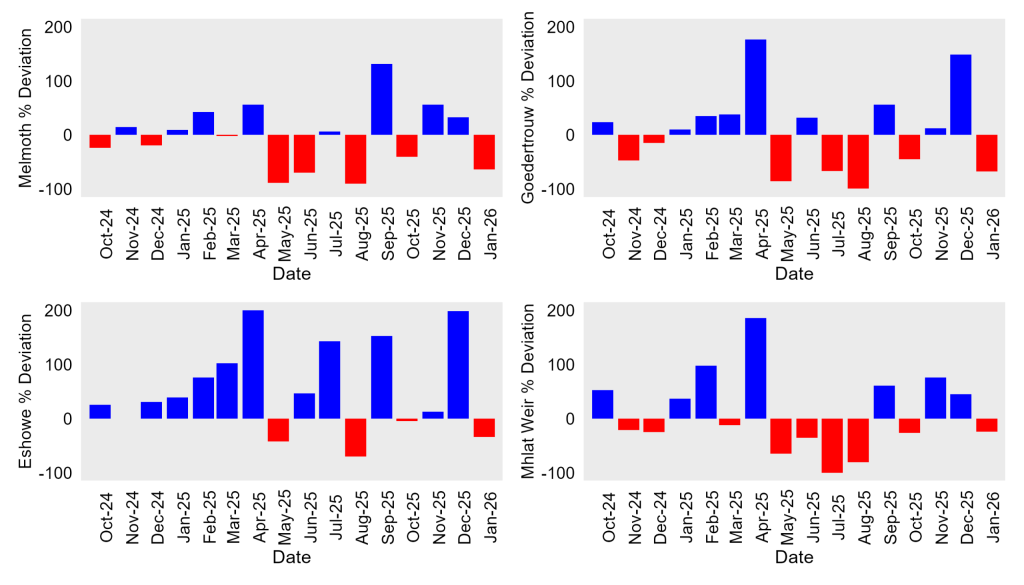
Figure 4: Monthly rainfall for dams in the uMhlathuze System (shown as percentage deviation from the long-term average).
Contrary to most of KwaZulu-Natal, the uPhongolo System received above-average rainfall during the first half of the rainfall season. Notably, the observed rainfall was nearly 200% above the long-term average during January 2026. The Phongolo region is located along the Lubombo and Lowveld Regions which experienced above-average rainfall during December and January. These regions experienced severe flooding in January, particularly the Limpopo and Mpumalanga Provinces, as well as Mozambique.
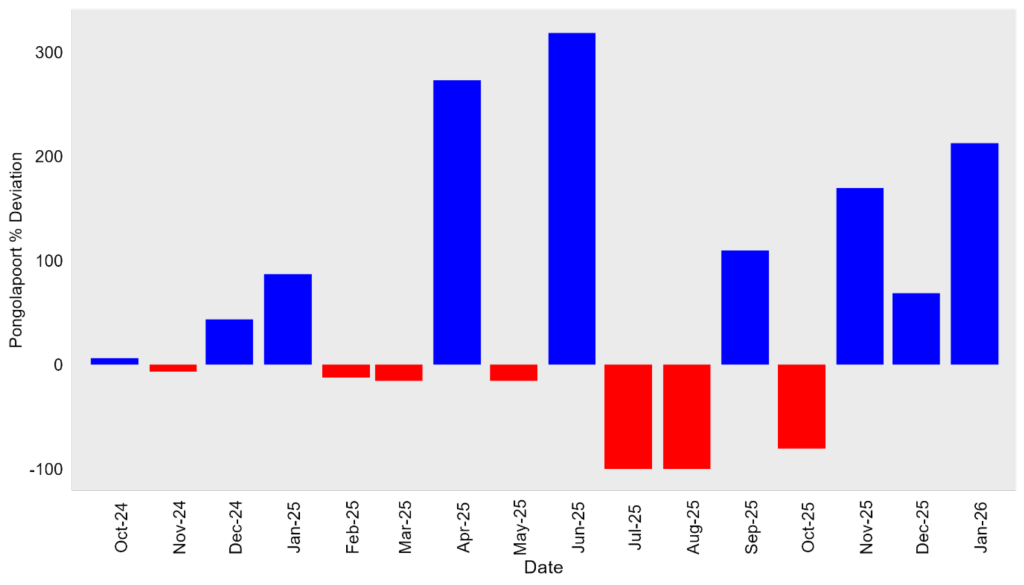
Figure 5: Monthly rainfall for dams in the uPhongolo System (shown as percentage deviation from the long-term average).
Contrary to typical La Niña conditions for southern Africa, uMngeni-uThukela Water’s operational area received below-average rainfall during the first half of the 2025/26 rainfall season. October and January consistently recorded below-average rainfall throughout the KwaZulu-Natal province. Only the north-eastern corner of the KZN Province, which borders Mozambique, eSwatini and the Mpumalanga Province, received above-average rainfall during the first half of the rainfall season. Despite the low-rainfall, UUW-operated dams remained at high storage levels during the first half of the rainfall season, due to the above-average rainfall received towards the end of the 2024/25 rainfall season. However, continued low rainfall conditions may pose a risk to the water resources. Therefore, it is important for UUW to closely monitor the rainfall and dam levels over the next few months.
According to climate models by the International Research Institute for Climate and Society (IRI), the El Niño Southern Oscillation is currently in a weak La Niña state and there is high likelihood for development of neutral conditions towards the end of the summer season. With the below-average rainfall received over the last four months, water users are encouraged to actively participate in ensuring the sustainability of our water resources. Let’s make water conservation a lifestyle by endorsing small household water practices such as using a cup when brushing our teeth and reusing water for non-potable activities. UUW will provide the next update at the end of March 2026.