
By Mlungisi Shabalala, 20 May 2026
The El Niño Southern Oscillation (ENSO) is currently in a neutral state. However, a warming trend has been observed in the sea surface temperatures (SST) in the Central Pacific Ocean over the last few months and climate models suggest that SST will continue to rise rapidly towards the winter season. As a result, probabilistic climate projections show a high likelihood (98% chance) for the development of an El Niño cycle during early winter and a similar probability for El Niño to prevail into the summer season (see predictions by the International Research Institute for Climate and Society below). Some reports suggest the predicted El Niño cycle to be one of the strongest on record, terming it a Super El Niño. In southern Africa, El Niño conditions are associated hot (high temperatures) and dry (low precipitation) climatic conditions. Thus, prolonged El Niño conditions result in the development of droughts, which have a direct negative impact on water availability. In addition, droughts result in socioeconomic distress in the form of food shortages and malnutrition, inflation, high food prices and disease.
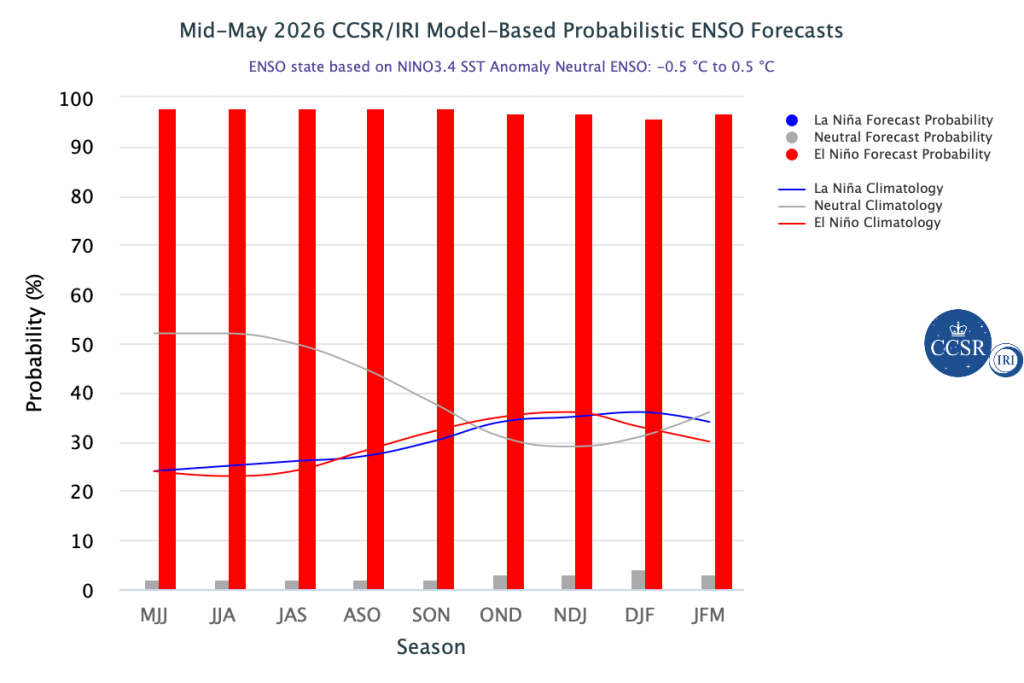
Figure 1: Latest ENSO predictions. Source: IRI.
Current water resource Status in uMngeni-uThukela Water’s (UUW) operational area
Most of the KwaZulu-Natal province, including UUW’s operational area, has generally received below-average rainfall during the summer season. For example, the South Coast region has received below-average rainfall for ten of the last twelve months and the impact of the low rainfall can be observed through the rapid decline in storage levels since the onset of the dry season (i.e. May). For example, the Umzinto and Mhlabatshane Dam levels have declined by 10% since the beginning of May, compared to a sustained full supply volume for a similar time last year. Therefore, the El Niño forecast necessitates the need to closely monitor the dam levels.
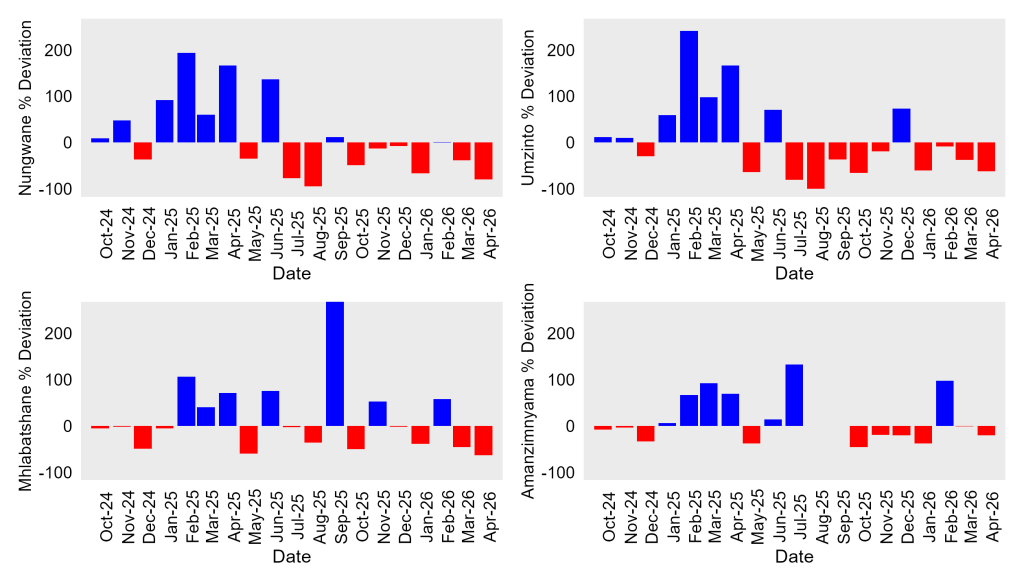
Figure 2: South Coast rainfall deviation from long-term averages (October 2024 to April 2026).
Should we be worried?
A high probability for the development of an El Niño cycle brings about concern for the southern African region, due to the socioeconomic implications of El Niño-induced droughts in the region. In South Africa, the 2015-2016 El Niño-induced drought resulted in the declaration of a national state of disaster. Similarly, a succession of low rainfall months in the Cape Provinces resulted in the declaration of a national state of disaster in 2021, as this region was experiencing the worst drought in 100 years. More recently, the 2023/24 El Niño cycle resulted in the declaring a state of national disaster in most countries within the Southern African Development Community, i.e. Botswana, Lesotho, Zambia, Zimbabwe, Namibia and Malawi, due to the below-average rainfall. These historical events highlight the potential impacts of sustained El Niño conditions.
Table 1: South Coast Dam levels on 01st and 20th May 2026, as well as 01st and 20th May 2025.
| 2026 | 2025 | |||
| Site Name | 01 May ’26 (%) | 20 May ’26 (%) | 01 May ’25 (%) | 20 May ’25 (%) |
| South Coast System | ||||
| Nungwane Dam | 100.3 | 99.1 | 101.8 | 101.3 |
| Umzinto Dam | 99.1 | 85.9 | 100.5 | 100.2 |
| E.J. Smith Dam | 91.2 | 82.4 | 101.1 | 100.2 |
| Mhlabatshane Dam | 96.1 | 85.9 | 103.5 | 101.4 |
| Amanzamyama Dam | 77.2 | 71.3 | 100.0 | 96.4 |
Water managers should closely monitor the development of the ENSO signal, together with local weather conditions and dam levels. Water users are advised to practice and adopt efficient water management at household level to promote protection and conservation of water resources. An integrated approach to water demand and resource management will ensure that a repeat of Cape Town’s Day Zero is avoided, should the projected El Niño cycle and associated conditions materialise.